
May 7, 2025
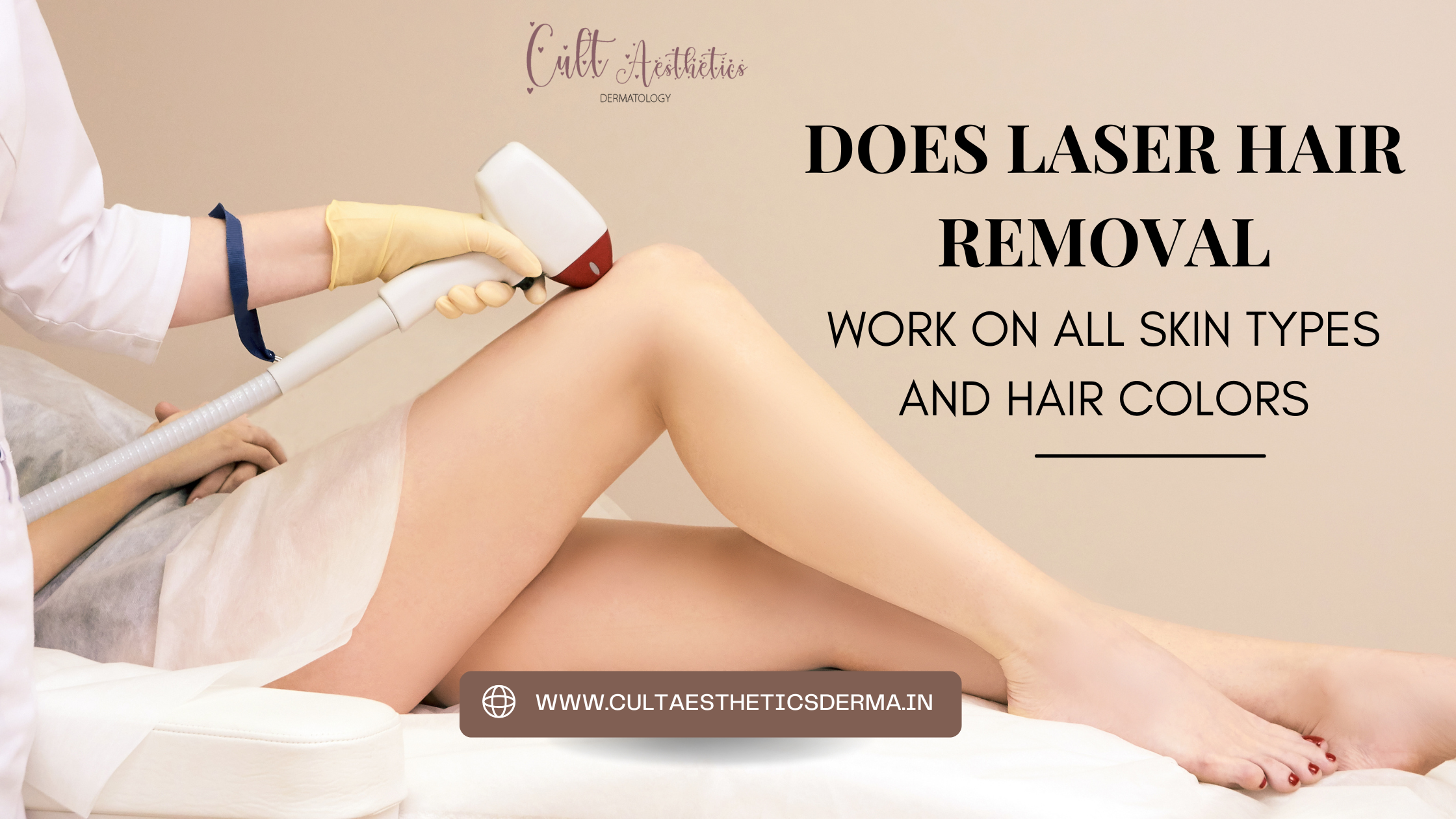
Does Laser Hair Removal Work on All Skin Types and Hair Colors
If you’re sick of shaving (or waxing or plucking at three-day intervals), laser hair removal is probably looking very appealing. It’s one of the most tried-and-true methods for getting smoother skin for longer — even permanently reducing hair growth in some cases.
But one that we hear on a weekly basis is: does it really work for everyone, irrespective of your skin tone or hair colour?
The honest answer? It has come a long way and is generally now safe on most skin types, but that still doesn’t make it best for all hair colours. So let me walk you through it in plain language.
How Laser Hair Removal Actually Works?
At its most basic level, laser hair removal works by a beam of light that is absorbed by the pigment (melanin) in your hair. That energy is converted into heat, which destroys the hair follicle so that it can slow or even stop growing back.
It’s super effective when there’s a good contrast – dark hair on lighter skin – because the laser can zero in on the hair without bothering the skin too much.
Older lasers were picky, but today’s technology (like Nd:YAG, diode, and combination lasers) has made it much more inclusive.

The Fitzpatrick Scale: Why Skin Type Matters?
Dermatologists use something called the Fitzpatrick scale to classify skin types from I to VI based on how your skin reacts to the sun (from very fair that always burns to deep dark that never burns).
Here’s a quick breakdown:

- Types I-III (fair to medium skin): These used to be the “ideal” candidates. Less melanin in the skin means the laser easily targets dark hair without risking burns. Results are often fastest here.
- Types IV-VI (olive to deep dark skin): In the past, these were trickier because more melanin in the skin could absorb the laser heat, leading to burns or pigmentation changes. But now? Absolutely yes – with the right laser like Nd:YAG (1064 nm wavelength), it’s safe and effective. This laser goes deeper and bypasses much of the skin’s melanin.
Many clinics today use advanced machines (like Candela GentleMax Pro or Soprano Titanium) that work great across all types. Studies and real-world results show similar hair reduction (around 70-90% after 6-8 sessions) for lighter and darker skins when done properly.
What About Hair Colours?
This is where it gets a bit more limited. The laser needs melanin in the hair to work well.
- Dark hair (black, brown): Best results, no question. High melanin = laser loves it.
- Light brown or medium hair: Still good, especially with modern diodes or alexandrite lasers.
- Blonde, red, grey, or white hair: Here’s the catch – these have little to no melanin. Traditional lasers just can’t target them effectively. You might see minimal or no results.
For light hair, some newer devices (like those combining wavelengths or using radio frequency) claim better outcomes, but they’re not as reliable. The gold standard alternative? Electrolysis – it zaps each follicle individually with electricity and works on any hair colour (though it’s slower and more hands-on).
Who Actually Sees the Best Results?
If we’re talking about the “ideal” candidate, the old rule of thumb—dark, coarse hair against a lighter skin tone—still holds true because the contrast allows the laser to lock onto the follicle with ease. However, the narrative that laser isn’t for everyone is officially outdated.
With the shift toward Nd:YAG and multi-wavelength technology, we’re now seeing incredible results for darker skin tones that were previously told to avoid laser altogether.
The real challenge remains with very light hair (blonde, red, or grey), where the lack of pigment makes it hard for the laser to “see” its target. In those cases, we’re honest with our patients: electrolysis might be a more effective path.
What the Process Really Looks Like?
Before you jump in, there are some “real-world” logistics to consider. This isn’t a one-and-done miracle; you’re looking at a commitment of 6 to 10 sessions, spaced out to catch every hair in its active growth phase.
While “permanent” is the word most people use, “long-term reduction” is more accurate. Hormonal shifts or life changes can sometimes wake up dormant follicles, meaning a maintenance touch-up once a year is a smart move.
The Safety Factor
When handled by an experienced hand, the risks are minimal—usually just some temporary redness that feels like a mild sun-snap. The horror stories of burns or pigment changes almost always stem from “bargain” clinics using the wrong laser for the skin type.
This is why a patch test is non-negotiable at Cult Aesthetics. We need to see how your skin reacts to the specific wavelength before we treat a full area. If you’re tired of the guesswork, a professional consultation is the only way to get a realistic timeline tailored to your specific hair-and-skin combo.

Comment